Many business owners wear their busyness as a badge of honour.
They’re involved in every important decision, approve every payment, solve every customer problem and answer every difficult question.
At first, this feels like good leadership.
Over time, however, it often becomes one of the biggest barriers to business growth.
This is known as founder dependency.
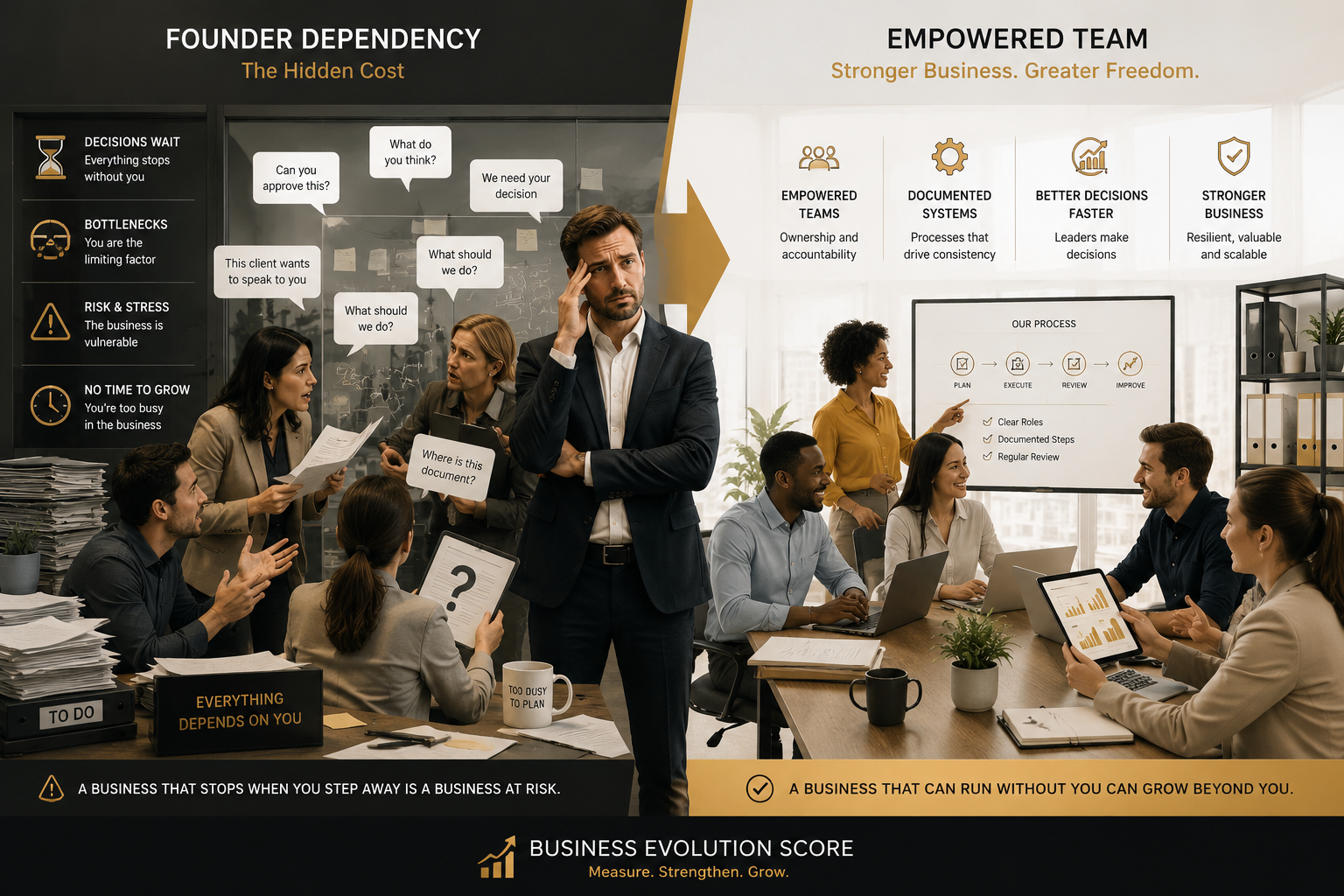
When a business depends on one person to keep everything moving, growth becomes slower, risk increases and the long-term value of the business declines.
What Is Founder Dependency?
Founder dependency occurs when the owner becomes central to almost every part of the business.
Examples include:
- Clients only want to speak to the owner.
- Staff wait for the owner to make decisions.
- Sales stop when the owner isn’t involved.
- Important knowledge exists only in the owner’s head.
- The business struggles whenever the owner is away.
Many small businesses start this way.
The challenge is recognising when founder involvement becomes founder dependency.
The Hidden Cost of Founder Dependency
Founder dependency affects far more than the owner’s workload.
It influences almost every aspect of the business.
Growth Slows Down
Every decision eventually waits for one person.
As the business grows, this creates bottlenecks that limit capacity.
Teams Stop Taking Ownership
When employees believe every decision needs approval, initiative disappears.
Strong People & Leadership encourages accountability and empowers teams to solve problems confidently.
Customers Become Attached to One Person
Customers often build strong relationships with founders.
While this creates trust, it also creates risk.
If every important relationship depends on one individual, the business becomes vulnerable.
Business Value Declines
Businesses that rely heavily on their founders are generally more difficult to sell.
Potential buyers want systems, capable teams and predictable performance—not a business that depends on one person’s daily involvement.
Founder Dependency Is Also a Risk
One of the seven pillars of the Business Evolution Framework is Resilience & Risk.
Founder dependency is one of the biggest risks facing many growing businesses.
Illness, holidays or unexpected life events should not bring the business to a standstill.
Resilient businesses are designed to continue operating even when the founder steps away.
Reducing Founder Dependency
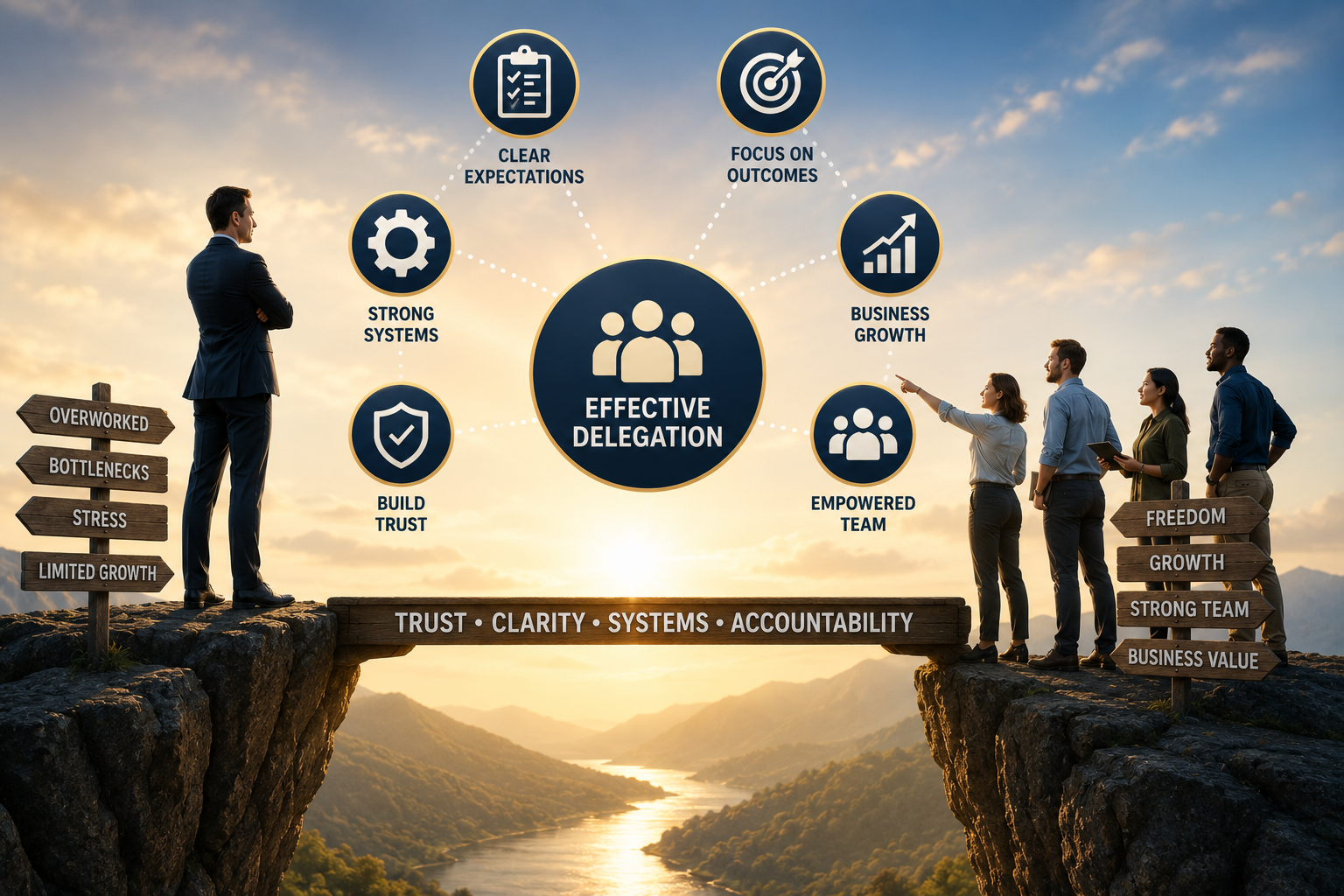
Reducing founder dependency doesn’t mean becoming less involved.
It means building a stronger business.
Practical steps include:
- Document important processes.
- Delegate decision-making.
- Develop future leaders.
- Build systems instead of relying on memory.
- Encourage accountability across the team.
These improvements create a business that is stronger, healthier and easier to grow.
Building a Business Beyond Yourself
As I discuss in The Purposeful Entrepreneur, one of the greatest transitions for any entrepreneur is moving from being the business to building a business that can succeed without constant founder involvement.
That shift creates freedom for the owner while making the business more resilient and valuable over the long term.
Measure Your Founder Dependency
The Business Evolution Score assesses founder dependency as part of its People & Leadership and Resilience & Risk pillars.
Rather than relying on assumptions, you’ll receive practical insights into how dependent your business is on you and the steps you can take to strengthen it.
If you’re wondering whether your business could continue operating without you for two weeks, it’s worth finding out.
Take the free Business Evolution Score assessment and discover where your business stands.